

Are Fitness Trackers Accurate for Sleep Tracking?
Table of Contents
- How Fitness Trackers Measure Sleep Without a Lab
- How Sleep Trackers Measure Sleep Stages
- Sleep Tracking Accuracy by Metric: What You Can Trust
- Sleep Tracker vs Sleep Study: Key Differences
- Why Accuracy Varies: Device Type, Fit, and Movement
- How to Check and Improve Your Sleep Tracking Accuracy
- Orthosomnia and Sleep Tracking: When Data Hurts
- Conclusion
- Frequently Asked Questions
Last Updated: October 14, 2026
How Fitness Trackers Measure Sleep Without a Lab
Are fitness trackers accurate for sleep tracking? The short answer: they are good at telling you when you slept, and much weaker at telling you how you slept. That gap matters, and this guide from Brilliant In Everyway breaks down exactly where each type of reading holds up.
A sleep tracker is a wearable device that estimates your sleep using motion and heart signals instead of brain activity. It never measures sleep directly. It guesses.
Here is the core problem. A lab uses electrodes on your scalp to read brain waves (Sleep Studies - Sleep Studies). A wristband uses an accelerometer to feel your wrist move. Those are not the same measurement.
So the device builds a model. It asks: does this pattern of stillness and pulse look like sleep? Usually, yes. Sometimes, no.
Below, we'll show you which numbers you can trust, which you should ignore, and how to test your own device at home.
How Sleep Trackers Measure Sleep Stages
Most sleep trackers estimate stages by combining three signals: movement, heart rate, and heart-rate variability. The algorithm sorts your night into light sleep, deep sleep, and REM sleep.
That sorting is where accuracy drops. Detecting sleep is one problem. Splitting it into stages is a harder one.
Here is the mechanism. During non-REM sleep, your heart rate and breathing slow and become more regular. During REM sleep, your heart rate becomes more variable and your body approaches paralysis while your eyes dart.
A lab does something different. Polysomnography reads brain waves, eye movement, and muscle tone directly. Those three signals are what define a sleep stage clinically. A wrist sensor cannot see any of them. It infers them from the outside.
That inference is where the error lives. A common pattern is that trackers overestimate deep sleep and underestimate REM, because quiet wakefulness and light sleep can look similar to deep sleep from the wrist. A still body with a slow pulse reads as "deep" even when you are lying awake.
A common mistake is treating stage data as fact. In practice, these are nightly estimates, not measurements.
Here is how the main sensor types compare:
| Device Type | Main Sensors | Strength | Weakness |
|---|---|---|---|
| Wrist wearable | Accelerometer, optical heart rate | Sleep duration, sleep-wake detection | Stage estimates |
| Smart ring | Accelerometer, heart rate, temperature | Comfort, long-term trends | Limited raw data |
| Phone app | Microphone, motion | Convenience, no hardware | Movement of the bed |
| Chest strap | Heart rate, breathing rate | Steady heart data | Less comfortable |
A smartwatch and a smart ring often disagree on the same night. Neither is necessarily wrong. They are running different algorithms on different sensor data.
One more layer matters: the algorithm itself. Every brand writes its own rules for what counts as deep sleep, and those rules are proprietary. There is no shared standard across devices. That is why two trackers worn on the same wrist on the same night can report different stage totals, and why a firmware update can change your numbers without changing your sleep.
Sleep Tracking Accuracy by Metric: What You Can Trust
Not all sleep metrics deserve equal confidence. Here is a practical confidence ranking you can apply tonight, with the reason each one lands where it does.
High confidence:
- Total sleep duration
- Time in bed
- Sleep-wake detection
- Long-term trends over weeks
Medium confidence:
- Sleep onset time
- Wake after sleep onset
- Sleep efficiency
Low confidence:
- Deep sleep minutes
- REM sleep minutes
- Light sleep minutes
- Staging accuracy on any single night
The pattern is simple. Metrics built on movement hold up better. Metrics built on stage classification do not. A tracker that knows you were still for seven hours is doing something reliable. A tracker that claims 42 minutes of deep sleep is making a much softer guess.
According to the National Heart, Lung, and Blood Institute's overview of sleep studies, clinical sleep testing measures brain activity, eye movement, and muscle tone together. Consumer wearables capture none of those directly.
So when your ring says you got 42 minutes of deep sleep, treat that as a rough signal. Not a diagnosis.
A caveat most guides skip. Accuracy figures you see quoted come from specific studies, on specific device generations, with specific comparison methods. A number from a 2018 study of one wristband does not describe the ring you bought last month. Treat any single accuracy percentage as a snapshot, not a universal rule.
How to validate your own device at home. This is not clinical validation, it is a sanity check. For three nights, write down when you got into bed, when you think you fell asleep, and when you woke. Compare those to your tracker's onset and wake times.
When the data conflicts with how you feel. If your tracker says you slept great and you feel wrecked, trust your body. If it says you slept badly and you feel fine, trust your body. Persistent daytime fatigue, loud snoring, or gasping during sleep are reasons to see a clinician, not reasons to buy a better tracker. Bring your data to the appointment and let a professional interpret it.
Sleep Tracker vs Sleep Study: Key Differences
A sleep study and a sleep tracker answer different questions. A sleep study diagnoses disorders. A tracker describes habits.
Polysomnography is the clinical standard. It records brain waves, oxygen levels, heart rate, breathing, and eye and leg movements in a lab, supervised by a technician.
Actigraphy is a middle ground. It uses a movement sensor worn for days or weeks. Doctors use it to look at sleep patterns over time, not to stage a single night.
Consumer wearables sit below both. They are cheap, comfortable, and continuous. They are also unregulated as medical devices.
What most guides miss is the direction of the error. Trackers tend to flag quiet wakefulness as sleep. That means your "8 hours" may include time you were actually lying awake.
Smart Waterproof Bluetooth Sports Health Ring →
If you suspect a real sleep problem, a tracker is not a substitute for a clinician. Bring your data to the appointment. Let a professional interpret it.
Why Accuracy Varies: Device Type, Fit, and Movement
Accuracy swings wildly between devices and between nights. Three factors drive most of that variation.
Device fit. A loose band slides and creates false movement. A tight band can pinch circulation and distort heart-rate readings. The sensor needs steady skin contact.
Movement. Restless sleepers generate more motion noise. That noise blurs the line between sleep and wake.
Individual differences. Skin tone, wrist hair, body temperature, and circulation all affect optical heart-rate sensors. Two people wearing identical devices can get different quality data.
Algorithm differences. Every brand writes its own rules for what counts as deep sleep. There is no shared standard.
This is why one reviewer calls a device accurate and another calls it useless. They are not testing the same thing.
How to Check and Improve Your Sleep Tracking Accuracy
You can test your own device in about a week. Here is a step-by-step process.
Step 1: Log your sleep manually for three nights. Write down when you got into bed, when you think you fell asleep, and when you woke.
Step 2: Compare against your tracker. Look at sleep onset and wake time. A gap of more than 30 minutes on two of three nights points to a fit or placement problem.
Step 3: Check the fit. The band should sit snug against your skin, one finger-width from your wrist bone. It should not slide when you shake your arm.
Step 4: Wear it the same way every night. Consistency beats perfection. A device worn the same way gives comparable data over time.
Step 5: Track trends, not single nights. One bad night means nothing. A two-week pattern means something.
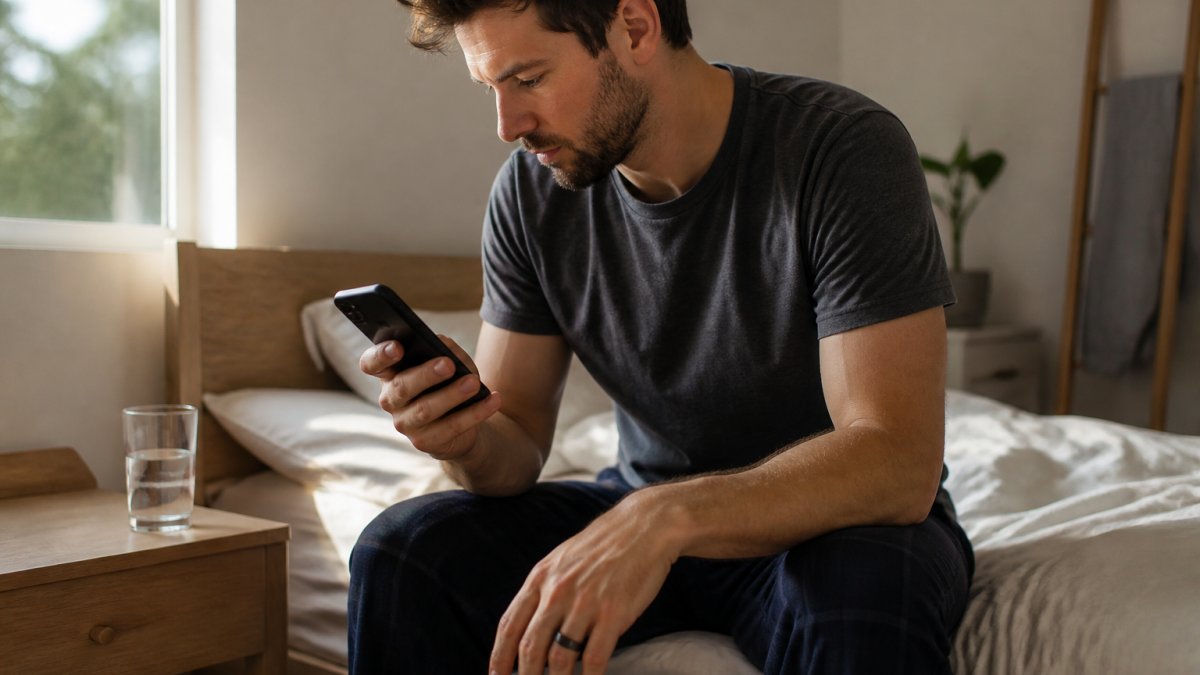
Step 6: Validate against how you feel. If your tracker says you slept great and you feel wrecked, trust your body. If it says you slept badly and you feel fine, trust your body.
A simple weekly check:
- Logged sleep manually for three nights
- Compared onset and wake times
- Adjusted band fit
- Checked for skin irritation
- Reviewed the two-week trend, not one night
For a wearable that handles the basics well, our Smart Waterproof Bluetooth Sports Health Ring tracks heart rate, blood oxygen, and sleep quality in a waterproof design. It is a comfortable option for nightly wear, which is what accuracy actually requires.

Orthosomnia and Sleep Tracking: When Data Hurts
Orthosomnia is a term researchers use for anxiety about sleep caused by tracking it too closely. The data becomes the problem.
The pattern looks like this. You check your sleep score the moment you wake. It is low. You worry. The worry makes the next night worse. The next score is lower.
Sleep feedback is supposed to help. For some people, it does the opposite.
Signs to watch for:
- Checking your score within minutes of waking
- Feeling anxious before bed about "performing" for the tracker
- Changing your routine nightly based on one score
- Trusting the device over how you actually feel
If that sounds familiar, take a break from the numbers. Wear the device but hide the score. Look at your two-week trend once a week instead of your nightly number.
Sleep health is about how you feel during the day. A tracker is a tool, not a verdict.
Conclusion
The real challenge with sleep tracking is not the technology. It is knowing which numbers to trust and which to let go. Trackers are useful for spotting long-term trends in sleep duration and sleep-wake patterns, but they fall short on stage estimates and cannot replace a clinical sleep study.
At Brilliant In Everyway, we stock wellness electronics built for consistent daily wear, including our Smart Waterproof Bluetooth Sports Health Ring with heart rate, blood oxygen, and sleep quality tracking in a waterproof design. Get started with Brilliant In Everyway and build a sleep routine you can actually stick to.
Frequently Asked Questions
How accurate is Apple Watch sleep tracking?
Independent studies show the Apple Watch detects sleep versus wake with roughly 90% agreement compared to polysomnography, but sleep-stage estimates are far less reliable. Deep sleep and REM sleep detection often falls below 60% accuracy. The watch uses accelerometry and heart rate to estimate stages, which cannot match the brain-wave data a clinical sleep study provides. For spotting broad trends in sleep duration and consistency, it works well. For diagnosing a sleep disorder, it does not.
Can a fitness tracker tell the difference between being awake and asleep?
Most fitness trackers can distinguish sleep from wake with reasonable accuracy, typically 80-90% agreement with clinical testing. They rely on movement and heart rate patterns: when you stop moving and your heart rate drops, the algorithm logs sleep. The problem is quiet wakefulness. If you lie still but are awake, the tracker may score it as sleep. This inflates total sleep time and is one of the most common sources of error in sleep tracking accuracy.
What is orthosomnia and how does sleep tracking cause it?
Orthosomnia is a term researchers coined for people who become anxious about achieving perfect sleep scores, leading to worse sleep. The cycle works like this: you check your tracker, see a low score, worry about it, and then struggle to fall asleep because you are anxious. Studies have identified cases where patients developed insomnia symptoms after becoming fixated on sleep tracker data. If your tracker is making you more stressed about sleep, not less, consider taking a break from nightly monitoring.
Are sleep trackers as accurate as a sleep study?
No. A sleep study, or polysomnography, measures brain waves, eye movement, muscle activity, breathing, and blood oxygen in a clinical setting. It is the standard for diagnosing sleep disorders. Consumer wearables estimate sleep from movement and heart rate, which is a fundamentally different approach. Sleep trackers are useful for spotting long-term trends in your sleep habits. They cannot replace a clinical sleep study for diagnosing conditions like sleep apnea or narcolepsy.